First Butterfly of 2022


We have just returned from a short holiday near Chepstow having passed through the Forest of Dean on our way there. One of our stops was at Cannop Ponds; two pre-1830 ponds built to supply water to a waterwheel at Parkend Ironworks. 

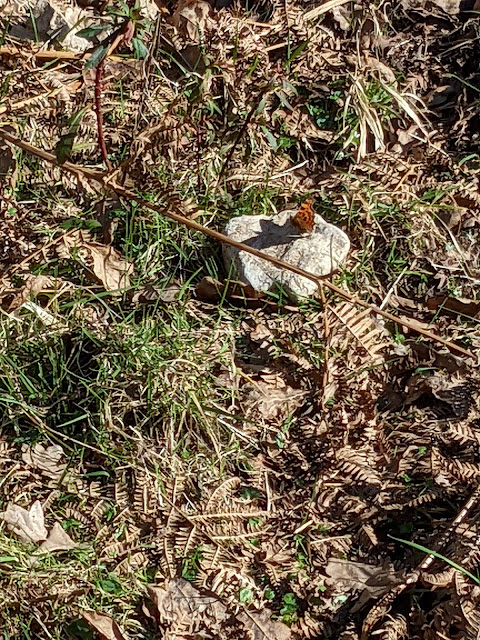
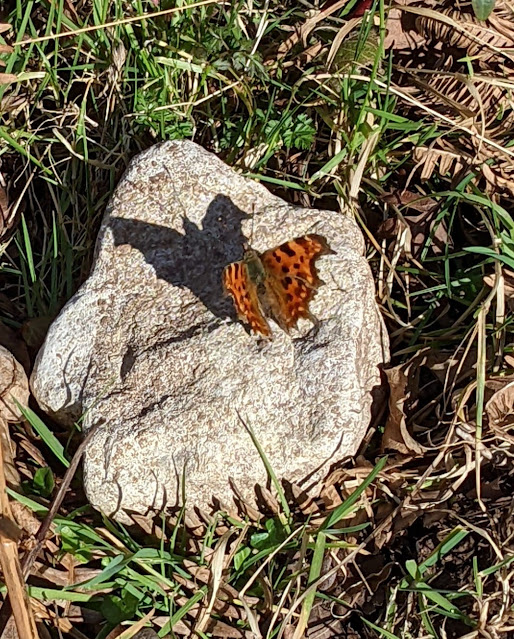
14th March 2022 was a warm sunny day; in fact the warmest March day so far in 2022 at 16 ℃. Mary spotted a butterfly fluttering by. Fortunately, it landed on a nearby stone where it stayed for sometime warming itself in the sunshine. I took a quick snap on the camera phone (above) while Mary stealthily crept closer to get this much better photo on her phone...


...a Comma. These butterflies hibernate so it was not unusual to see it in its natural habitat (open woodlands and wood edges) at this time of year.

Last year (2021), we spotted our first garden butterfly (a Peacock) on 21st March in the polytunnel.

BIOCHAR(M OFFENSIVE)

I'm not sure when I got my first HOTBIN composter; I remember buying it from Tony Callaghan, inventor of the HOTBIN, before he sold the patents and company to DS Smith in January 2016. Tony then moved into biochar R&D/manufacturing with his new company SoilFixer.


I bought my first lot of biochar from Soilfixer in 2018 and they are still my preferred supplier. Why? Because the product is top class and Tony is not only enthusiastic and knowledgeable about biochar but always available wth plenty of helpful advice.

[Note: in 2019, I received a free prototype Supercomposter from Tony for evaluation, comment and critique. I will discuss my experience with this equipment in a later post]  

What is Biochar?

The International Biochar Initiative (IBI) defines biochar as 'the solid material obtained from the thermochemical conversion of biomass in an oxygen-limited environment'. In essence, it is a form of charcoal used today mainly as a fuel for BBQs. Biomass (e.g. wood, straw, coir) heated in air is termed combustion and produces mainly water, carbon dioxide and mineral ash. When biomass is heated in an inert atmosphere (i.e. oxygen-deficient) then it is called pyrolysis and yields predominantly biochar, bio-oil and bio-gas (aka syngas). Combustion and pyrolysis both release carbon dioxide (bad!); however, the latter produces only half as much (good!).

Biochar Benefits 

For the gardener/farmer/horticulturist, the most important use of biochar is as a soil improver or amendment. Qualitatively, it is acknowledged that soil health improves when biochar is added, especially when added to poor quality soils. Quantifying the benefits, in order to decide whether it is a cost-effective intervention, is more difficult because: (i) biochar is not a uniform standardized product due to variations in the biomass feed, pyrolysis conditions and post-pyrolysis processing/treatment, (ii) standardising field trials to directly compare with/without biochar is hard, and (iii) biochar is usually added as a co-mixture with compost, fertilizer, nutrients, etc.  

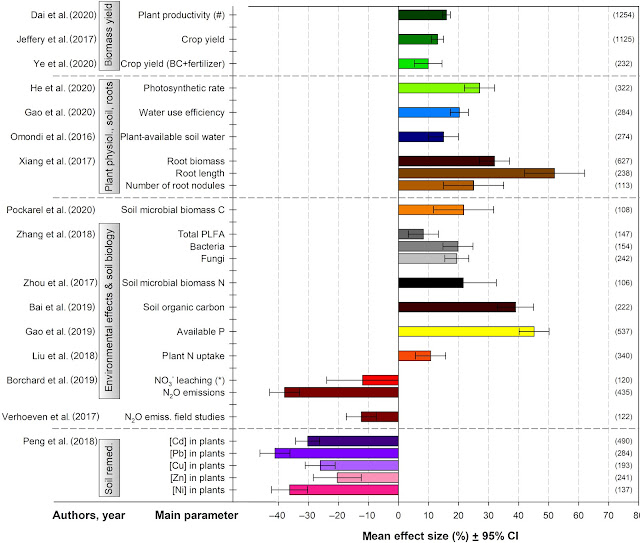
There have been over 15,000 papers on the use of biochar in agriculture so it is, indeed, fortunate we have accesss to a meta-analysis of meta-analyses that summarise the results of all these studies. The graphic below is taken from 2021 paper by Schmidt et al. See the link to read the paper in full.


Biochar is slightly alkaline (pH 7-8) and seems to work best in sandy acidic soils although it is still benficial in other soil types. Biochar has a strong effect on root development and mass - perhaps unsurprising since it is added to the soil! With a larger, more-developed and active root system, the plant makes better use of available nutrients and water resulting in higher plant productivity and crop yields. Greater root mass leads to increased soil organic matter and net removal of atmospheric carbon dioxide.

There is good evidence biochar works better if primed with nutrient-rich additives such as garden compost, animal manure/slurry, urine and even artificial fertilizers. Nutrients are adsorbed onto the biochar surface; this reduces the loss of nutrients by leaching and allows the nutrient-primed biochar to act as a slow-release fertilizer.

Finally, adding biochar to soil improves water retention by the soil (good) without the soil becoming waterlogged (bad). While anecdotes are not evidence, in my experience I do not have to water the kitchen garden as much as I used to do.

Biochar and Climate Change

Biochar has the potential to sequester significant amounts of carbon into the soil where it will stay for centuries. It is, therefore, a simple, tried-and-tested method for mitigating climate change. It has been suggested it could offset 12% of the world's emissions of carbon dioxide though this seems a little optimistic to me. Making biochar from waste streams (wood offcuts, straw, plant residues, etc) does seem a no-brainer considering the added benefits to soil health and increased food crop yields.

1 kg of biochar buried in your garden is equivalent to offsetting about 3 kg carbon dioxide.

How to Use Biochar

Biochar can be worked directly to the soil prior to planting but I prefer to add it to my hot composting bins. This primes the biochar with nutrients and turns it into a more effective soil amendment. 

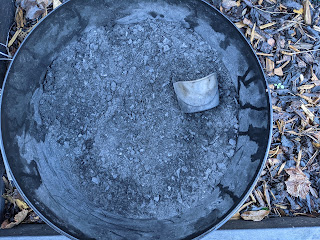
I use a 50:50 mix of Soilfixer Compost Activator (Humification Agent) and Biochar Granules (0-10mm), adding about 60 g with every 6 litres of garden/kitchen waste. An old laundry bottle cap serves as a useful measure for 60 g (see pic at top of page). The compost activator assists with the composting process and the biochar acts as a sponge for nutrients and micro-organisms. By using locally-sourced biochar (from Gloucestershire) primed/innoculated with garden compost from my garden (and some neighbours' gardens), the resulting compost is optimised for growing plants in my garden.

Is Biochar a Cost-effective Soil Amendment?

On a commercial (farming) scale, this is a very important question. If the cost is covered by increased crop yields while also improving soil health and making the soil more resilient to adverse weather events (floods & drought) then cost benefits start to accrue. Unfortunately, the cost of manufacturing biochar is currently too high for routine use on commercial farms. Scaling up biochar production should reduce prices and it would also help if the 'polluter pays principle' was universally applied by instigating a proper carbon tax (e.g. on fossil fuel-based fertilizers).

I use about 80 kg biochar products per year at a cost of around £195. This offsets my annual carbon footprint by about 250 kg (a quarter of a metric tonne) of carbon dioxide equivalent. Currently, this is much more expensive than paying into a carbon offset programme.

However, I am also benefitting from a healthier and more resilient soil, increased crop yields and reduced irrigation costs. Quantifying these benefits is difficult. Qualitatively, I know I am using less water for irrigation and crop yields seem to be higher (e.g. best onion crop ever last year). 

When I originally set up the kitchen garden, I had to remove lots of waste material and rubble and then infill with bought-in topsoil (recovered soil is sieved to remove large stones/roots and mixed with sand and compost). This was a very sterile environment for growing fruit and vegetables so I have been slowly improving the soil, year-by-year, by digging in garden compost initially and, more recently, compost and biochar. Soil tilth has improved and the colour has changed from light grey to dark grey.

As the soil carbon builds up in the soil, I will reduce the amount of biochar I add to my compost. At some point, I will need to send soil samples to a laboratory for analysis.

Finally, if you are interested in learning more about biochar and its benefits, then have a look at the Soilfixer website, FAQ and blog.


View from the Rear Window - February 2022

 January 2022 was warm and February continued along the same lines. See here, here, here and here. Indeed it has been a warm winter overall and, as a consequence, this wallflower has never stopped flowering over the winter months (Dec - Feb inclusive) ...

Of course, the main feature of the month was the three storms (Dudley, Eunice and Franklin) over the 7-day period from 16th to 22nd February. Our sheltered town garden experienced average wind speeds of 11 km/h (gentle to moderate breeze) and gusts up to 66 km/h (gale) over the week. This is a rare event since typical monthly average winds are in the range 3-5 km/h (light air) with gusts up to 45 km/h (strong wind).

The month of February started bright enough with a lovely sunny day. The sunlight giving the last blooms of the winter-flowering cherry an almost cloud-like appearance ...

The next picture shows the garden on the 19th February, in the 'lull between Storms Eunice and Franklin. The daffodils on the patio table had been moved to a less windy position on the floor before Eunice arrived and I had to pick up one of the small Xmas trees on the patio which had blown over. Otherwise, we escaped lightly...

On the last day of February, Mary wisely chose the morning to do some tidying up in the garden before the rain came at 2 pm...


Jobs in the Garden

1. Composting continues ad infinitum. The first lot of freshly-mown grass arrives to supercharge the hot bins

2. Finish pruning grapevines, pear and redcurrant and blackcurrant

3. Finish repotting wall strawberries. Some had become weedbound and others had died. After tidying up...


...there were still a few gaps. Fortunately, I managed to rescue a few dormant runners to revive in our heated Hydropod propagator ...


4. Plant out the newly-arrived bareroot raspberries - three each of Autumn Bliss, Glen Ample and Glen Prosen
5.  Lay seed potatoes (Blue Danube) out on shredded card to chit
6. Lots of general pruning and tidying up in the 'flower' garden
7. Still harvesting kale, broccoli, chard and spinach from the garden. Stored onions and potatoes still going strong!

February 2022 Weather

A summary of key weather parameters for February 2022 is presented in the table. Note: the minimum barometric pressure on the 18th coincided with the arrival of Storm Eunice.

February 2022

Weather Parameter

Value

Dates

Average Monthly Temperature 

8 oC


Maximum Monthly Temperature

18 oC

16th

Minimum Monthly Temperature

-2 oC

11th

Number of Air Frost Days

1


Number of Hot Days (> 25 oC)

0


Monthly Precipitation

66.8 mm


Greatest 24 h Precipitation

11.4 mm

20th - 21st

Number of Dry Days

11


Monthly Sunshine Hours (estimated)

59


Average Wind Speed

7 km/h


Highest Wind Speed

66 km/h

21st

Maximum Barometric Pressure (Sea Level)

1033.6 hPa

11th

Minimum Barometric Pressure (Sea Level)

977.6 hPa

18th

Average Barometric Pressure (Sea Level)

1025.3 hPa


The bar chart below shows the daily minumum and maximum temperatures throughout February. Daytime temperatures were remarkably constant over the whole month while nighttime temperatures stayed in positive territory except for the one night (11th). The temperature range and distribution was quite different to that observed in January. According to a recent scientific paper, high February temperatures have the strongest effect on inducing early flowering in plants and trees - so it will be interesting to see how this pans out in the months ahead.


The next bar graph plots the daily rainfall (blue) and solar radiation (orange) values for February. There were more rainy days (60%) than dry days (40%) with two-thirds of the monthly precipitation occurring between 13th and 22nd. The high ratio of rainy days meant some periods of low solar radiation (sunshine) although you can see the generally increasing trend as the days lengthen.


Finally, how does February 2022 compare with 2021 and 2020? Temperature-wise, this February was significantly warmer than the previous two years with a much higher maximum temperature and being almost frost-free.

February 2020 is looking like an outlier in terms of rainfall whereas the sunshine hours, number of dry days and maximum wind speeds are similar for all three years.


Hot Composting #1

As an avid composter, I've been meaning to write a series of articles on how I compost kitchen and garden waste in a small urban garden. I'm shocked, shocked to find my one and only post on this topic was 18 months ago!


From the start, I should emphasize that I will be mainly discussing 'Hot Composting Processes' as I believe this is the best option for urban gardens with limited resources of both space and organic matter (kitchen trimmings/waste and cooked food, lawn cuttings, tree/bush prunings, weeds, leaves, annuals, cut flowers, etc). Hopefully, you will learn more general principles of composting on your journey to Master Composter! Making compost is still very much an art although we know enough of the science for that knowledge to be useful. With a little training and plenty of practice, you will understand more than anyone else what works in your garden. 

There are, of course, alternatives if you have even more limited quantities of waste organic materials that you want to compost. For cooked/kitchen waste, try Bokashi. For raw kitchen waste and small amounts of plant waste, try a wormery or, even, a standard compost bin if you are the patient type.

What is Hot Composting?

In simple terms, the 'hot composting' process aims to provide optimal conditions for microbial activity to convert organic waste into rich garden humus as rapidly and efficiently as possible. To achieve this aim, the compost heap needs to spend periods of time at high temperatures (55 ℃ to 65 ℃), warm temperatures (40 ℃ to 55 ℃) and moderate temperatures (15 ℃ to 40 ℃).  A secondary, though important, objective is to destroy plant pathogens, fly larvae and weed seeds - this depends, largely, on achieving the highest temperatures.

Other essential factors to consider are moisture content, efficient aeration, pH, particle size, membrane/barrier disruption, range of materials and a biodiverse source of bacteria and micro-organisms. Consequently, the gardener should aspire to optimal conditions but be pragmatic enough to realise she/he will never reach that goal. Life is just not that simple or easy! You might say this is the First Law of Composting!

Commercial and municipal compost systems use the 'hot composting' process so it is beneficial for gardeners to understand, at least in broad terms, how they do it. First, they build the pile (the larger the better) using carefully sorted and graded (in terms of particle size, moisture content and C/N ratio) materials. The pile takes a few days to heat up to the target temperature (60-65 ℃) and is held at this temperature for a week or so. The temperature naturally drops to 40-55 ℃, when the composting process is optimal, and is kept there for a few weeks. Temperature and moisture content are controlled by turning the heap and adding water, if necessary. Finally, as the compost cools to ambient temperatures, the 'curing' or 'maturation' stage is entered, typically for a period of up to a month.

The HOTBIN® website claims to produce compost in 30-90 days (1 to 3 months) by achieving internal temperatures of between 40 ℃ and 60 ℃. While a useful guide,  this is only a guide. Realistically, I suggest you aim for a minimum period of 6 months to produce top-quality garden compost. This is still considerably faster than the 2-3 years using the cold composting method (see below). Your experience may be different because each 'compost process' is unique depending, as it does, on a large number of variables. While we want to mimic, as far as possible, commercial compost operations, we should remember they have access to a wide variety of input materials, along with machinery, monitoring and analytical instrumentation.

Note 1: Although I have not tried it, I suspect if you were to compost fresh grass mowings (source of nitrogen) with, say, shredded cardboard/paper (source of carbon) in the right proportions then some of the very short times - 2 weeks - claimed for 'hot composting' might be achievable. I have strong doubts about the quality of the final product except for its use as a mulch where the composting process continues al fresco!
Note 2: There are some products on the market claiming to produce 'compost' from food scraps in just 24 hours. The manufacturers of these products make plenty of claims but do not support those claims with evidence. As far as I can tell, these machines simply heat, blend and dehydrate kitchen waste and the manufacturers appear to have little or no understanding of how nature composts or, indeed, what compost really is. This equipment is expensive (£400-500?), requires electricity and consumables and is shipped from China. It is not a low-carbon alternative to home composting, whether of the hot or cold variety. Avoid! See here for someone else's critique on this type of 'composter'.

In summary, I aim to subject organic waste to a regime of temperatures as follows: >60 ℃ or more for 1-3 days and/or >50 ℃ for at least 7 days and, thereafter, to maintain a temperature of 40 ℃ or above for a further 21 days. Do I always achieve these objectives? No, but I always try to! I also include a maturation period of 6 months or more before using the compost in the garden.

Why Compost Hot?

First, consider the option of cold composting. This typically takes place at lower temperatures (ambient to 35 ℃) in an open compost bin and...
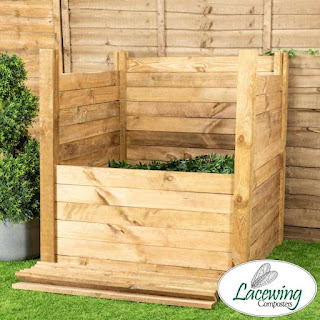
...it takes a long time (18 months to 3 years) before you have anything that you can use in the garden. You are more limited in terms of what you can add to the heap (no cooked food, no weed seeds, no diseased plant material). Without some care and maintenance, there is a chance it could turn into a slimy smelly mess which nobody wants to deal with! This set-up can also be used for warm/hot composting if you are prepared to put extra effort into the process; e.g. careful selection of the type of organic waste (C/N ratio, moisture content) and regular turning of the heap to ensure adequate aeration. You will certainly need at least two bins so you can be filling one while the other is maturing and each bin needs to have a volume of at least a cubic metre to ensure sufficient organic mass to heat up and maintain the high temperatures needed for 'hot composting'.

Compared to the cold composting method, some of the advantages of 'hot composting' are fairly obvious.

1. Faster composting by virtue of the Arrhenius equation which describes the effect of temperature on the rate (speed) of chemical reactions. The 'rule of thumb' is that the rate of a (bio)-chemical reaction approximately doubles for every 10 ℃ rise in the temperature of the reaction. In other words, reactions at 20 ℃, rather than 10 ℃, go twice as fast (or take half as long). Moreover, if the reaction temperature is further increased from 20 ℃ to 30 ℃, there is another doubling of the reaction rate (halving of the reaction time); hence, a four-fold increase in reaction rate on going from 10 ℃ to 30 ℃. This relationship should be valid over the full temperature range seen in composting.

So lets compare cold composting (with an average heap temperature of 10 ℃) with a 'hot composting' regime of one week at 50 ℃ (equivalent to 16 weeks at 10 ℃), three weeks at 40 ℃ (equivalent to 24 weeks at 10 ℃) and four weeks at 20 ℃ (equivalent to 8 weeks at 10 ℃). The 'hot composting' process over eight weeks will be equivalent to 48 weeks of cold composting; i.e. six times faster.

2. Killing weeds, pests and pathogens by heat. Why 50 oC or more for a minimum period of 7 days? Well, everyone defers to this scientific paper in Weed Science. Who knew there was a scientific journal called Weed Science? The paper is very easy to read and I recommend it to you. For those short on time, this study looked at the temperature/time combinations needed to kill the seeds of annual sowthistle, barnyard grass, London rocket, common purslane, black nightshade and tumble pigweed. Tumble pigweed was the hardest to dispatch but only took 113 hours (just short of 5 days) at 50 ℃. At 60 ℃, all the seeds were dead after 3 hours. Hence, by my reckoning 7 days at 50 ℃ should see the job done but higher temperatures for a shorter time are even better.

Plant pathogens are more difficult to kill, inactivate or sanitize. I would only add 'diseased' material if the compost temperature is greater than 60 ℃ and likely to maintain this temperature for at least 4 days. There is a risk, of course, but I have never (touch wood) had a problem with recurring diseases from plant pathogens and pests or germinating weeds from the compost I produce. The other option is to dispose of such material through your general waste collection.

3. A wider range of micro-organisms are involved in the decompostion process. Mesophiles perform best below 45 ℃ whereas thermophiles perform best above 45 ℃. The composting process benefits because different micro-organisms can decompose a more diverse range of substrates (e.g. woody versus green materials). Higher temperatures also help with the chemical breakdown of substrates via acid hydrolysis.

4. A hot compost pile is handy for disposing of pests such as slugs and snails - as an alternative to drowning in beer or being killed by slug pellets, salt or nematodes.

In the next few posts, I will be discussing how to put 'hot composting' in a small urban garden into practice.

First Cutting of the Greensward in 2022

We do not have a lawn. There wasn't much of a lawn when we moved here and we quickly decided it had to go and be replaced with trees and plants.

Lawns require a level of care and maintenance that far outweighs their usefulness, in our opinion, and they are severely lacking in biodiversity. That is not to say lawns are bad per se; they can be great as a childrens' playground, croquet pitch, badminton court, cricket square, etcetera, etc. And if you're not 'into' gardening then it may be a simpler option and far better than paving over the garden.

We are, however, grateful to our next-door neighbours for donating their grass cuttings so I can compost them. I will discuss the value of grass mowings in the composting cycle in future posts.

Yesterday, we received the first cutting of the year from our neighbour's turf: 27th February 2022. My first thought was that this seemed early. Checking my 'compost' records, where I note the types of material added to my hot composting bins, I discovered the first cut in 2020 was 19th March while for 2021 it was 15th March. So my first thought was indeed correct; this year's first greensward cut was, by two to three weeks, the earliest recorded (albeit, the record only goes back to 2020!).

This is another example of phenology. Obviously, the record is too short to draw any conclusions at the moment but it may be a useful proxy for changes in weather and climate.


Hereford Floods - February 2022

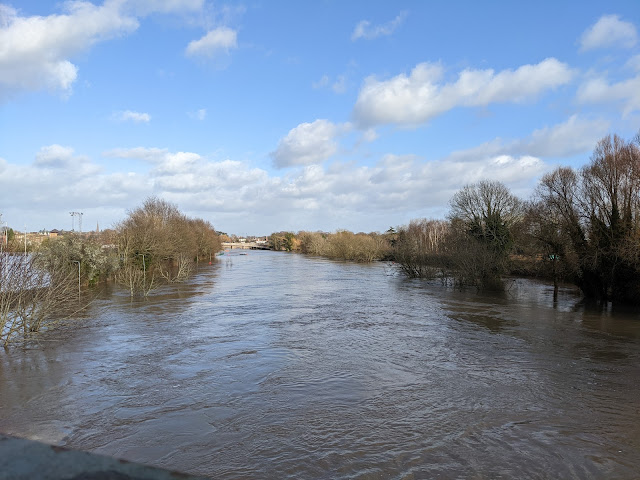
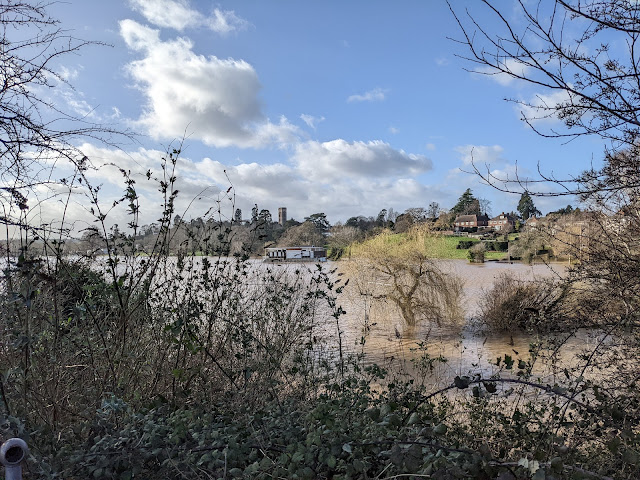
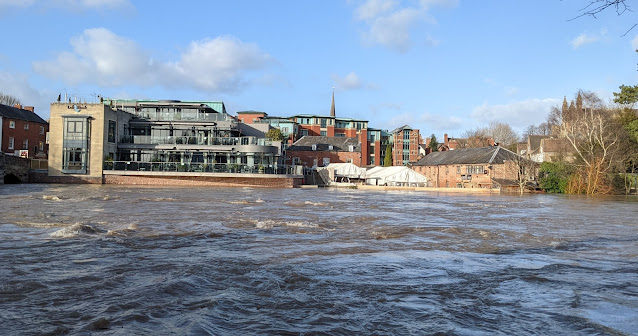
After three named storms in a week - Dudley, Eunice and Franklin - the wind subsided and the sun came out. Yesterday, it was time (3 pm, 21/2/22) to get some fresh air with a walk down to the River Wye. Rain in mid-Wales, where the source of the River Wye lies, takes 24-48 hours to work its way downstream to Hereford. If there is lots of rain in mid-Wales, then Hereford is susceptible to flooding.

Trying to find out how much rain had fallen in mid-Wales proved more difficult than I expected. I found this newspaper report saying 150 mm (6 inches) had fallen in upland Wales which had led to severe flooding along the River Severn. Eventually, I found a weather station (on the Davis Weatherlink network) at Rhyader that showed 203.2 mm (8 inches) of rain over the period of the three storms. The average rainfall in Rhyader is 100 mm (4 inches) for the whole of February! 

This photo was taken from the Hunderton Bridge on the Great Western Way looking towards the city. The river level was 5.2 metres (normal range 0.1 metre to 3.30 metres) and still rising, reaching its maximum (5.38 metres) about 6 hours later.

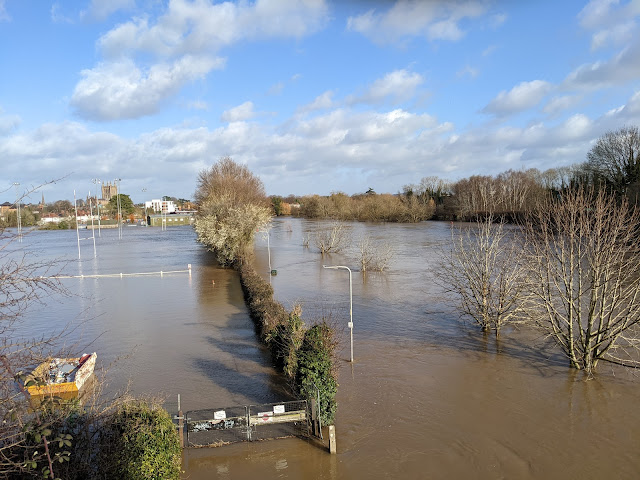
I guess there will be no rugby played this weekend at Hereford RFC...


...and fortunately, it is half-term for Hereford Cathedral School as the playing fields are under water...

February 2022 floods in Hereford

...the old Wye Bridge (built 15th Century, rebuilt/widened 17th Century, grade 1 listed) was temporarily closed at peak flood levels but lives to tell another day... 


...while De Koffie Pot (centre-right), one of our favourite eating and meeting places, just about avoided the flood water unlike 2 years ago; the benefits of some extra flood barriers clearly paid off...


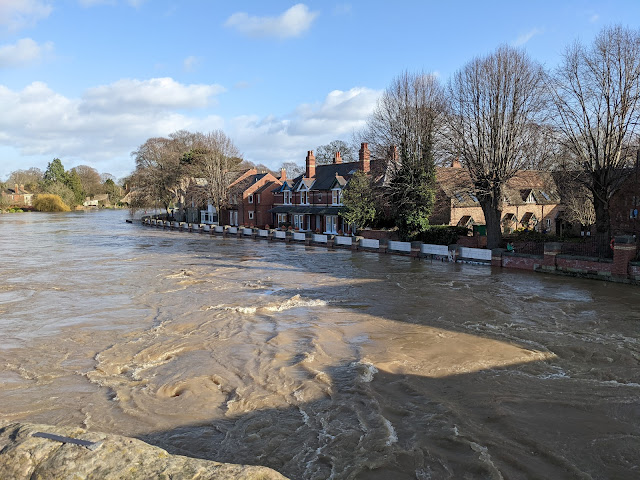
...meanwhile, this picture taken from the old Wye Bridge shows the flood barriers in place protecting the houses and businesses alongside the river...


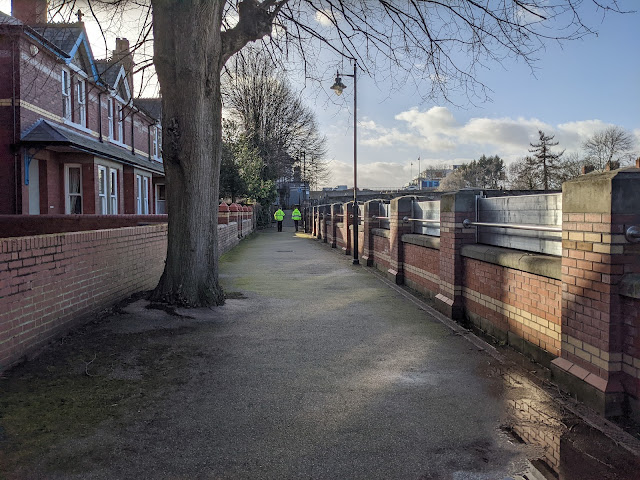
...with this view from the other side of the flood barriers showing what a good job they do. The Environment Agency still had people (yellow jackets) and equipment on site as the peak flood level was still a few hours off...


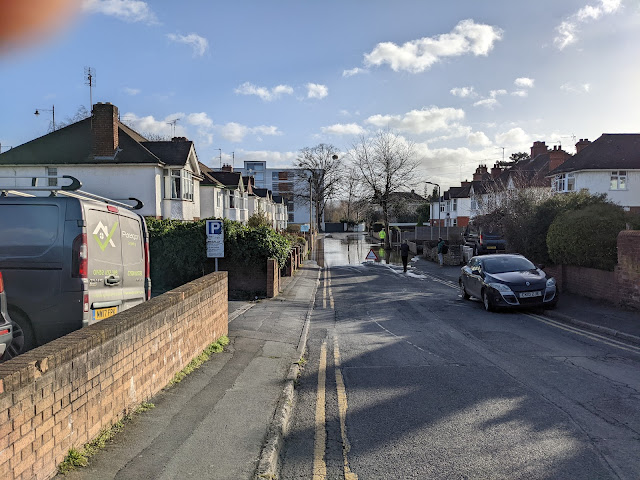
... and finally, on my way home, I took this photo of Greyfriars Avenue which runs down to the river and Hereford Rowing Club...


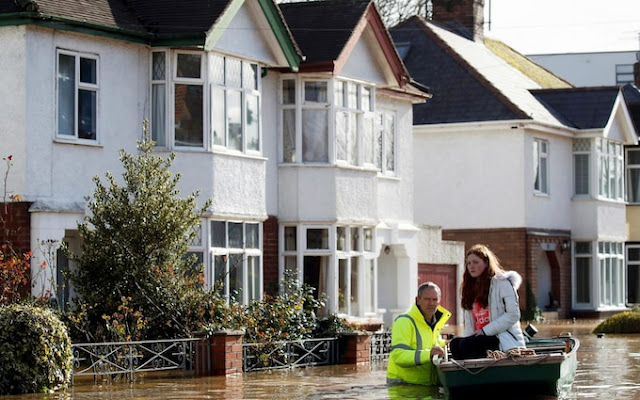
Two years ago, this road and its houses were severely flooded - it looked more like a canal as this picture from The Telegraph shows...


February 2020 had the highest flood levels (6.1 metres) ever recorded at Hereford Bridge Station due to a combination of Storm Dennis and exceptional local precipitation (100 mm, or nearly 4 inches, in 24 hours). This year, local precipitation was modest (26.8 mm over 3 days) which certainly helped.

Thankfully, as I post this, the floods are receding and levels are already below 4 metres.


First Daffodil of Spring


Continuing on the theme of early spring flowering, this pot of daffodils was blooming on February 10. They may have flowered a few days earlier but were tucked away so not on show. Located on a sunny patio, these are expected to be the first to flower in the garden. The ground-planted daffodils in the Secret Garden are in bud - but have a north-facing aspect so will flower later.


The flowering daffs shown in a previous post do not count as they were purchased this year from a market stall and will have been brought on in a glasshouse.

Popular Posts

Blog Archive