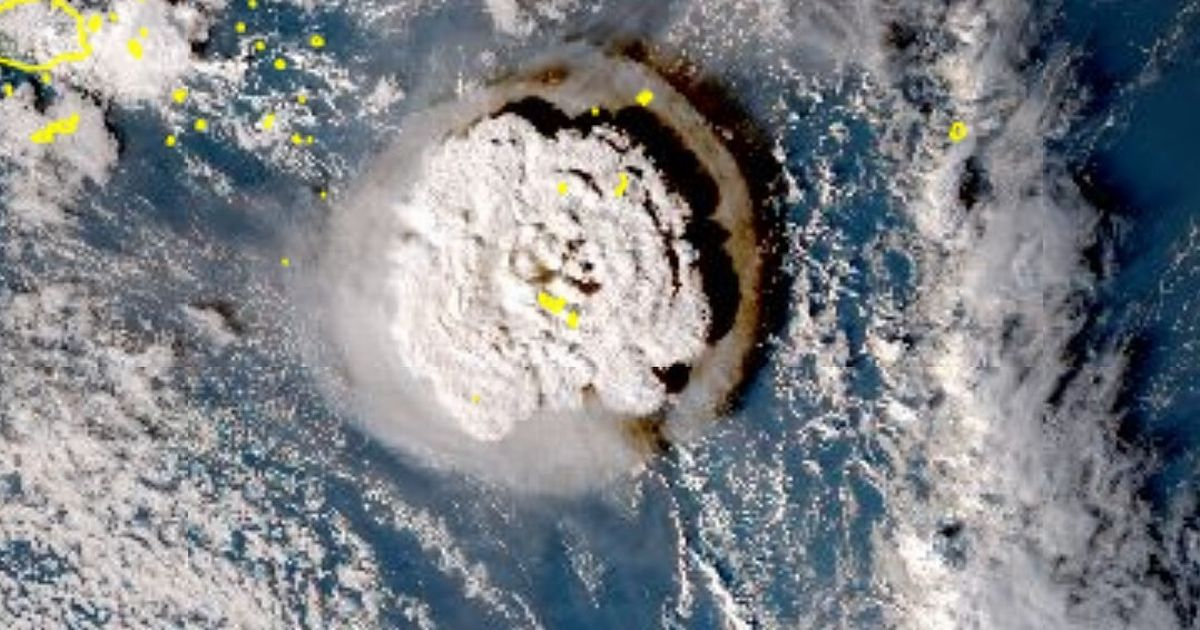
The very large volcanic eruption on the island of Hunga-Tonga on the 15th January 2022 was the largest eruption this century and the largest since Mount Pinatubo in 1991. The eruption occurred at 17:15 local time (04:15 GMT) and caused tsunamis in Tonga, Fiji, American Samoa, New Zealand, Japan, USA, Russia, Chile and Peru. The eruption was clearly visible from space and the shockwave was captured by satellite; https://twitter.com/i/status/1483634591160279044.
Along with the ocean waves (tsunamis), the eruption sent out pressure shockwaves that rippled through the atmosphere; much like throwing a stone into a still pond.
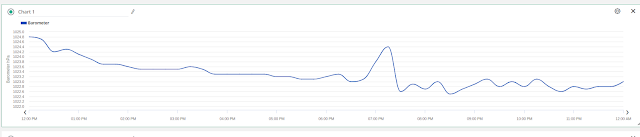
The shockwaves were picked up by the barometer on my Davis Weather Station. The peak shown in the barometric pressure plot (below) was detected at 19.15 GMT, some 15 hours after the eruption.
The shockwave travelled at 680 mph, so it would have covered a distance of 680 x 15 = 10,200 miles before reaching Hereford, England. The reported distance between Tonga and Hereford (UK) is 10,266 miles.
The Mount Pinatubo eruption caused a dip in global temperatures of about 0.4 oC as the ejected sulfur dioxide formed sulfate aerosols which reduced the amount of sunlight reaching the earth by about 10%. The Hunga-Tonga eruption is believed to have ejected only 1-2 % of the sulfur dioxide from Mount Pinatubo (due to much shorter eruption time); hence the effect on global temperatures is expected to be minimal.
Last weekend (28/1/22 to 30/1/22) was the RSPB's Big Garden Birdwatch. Birds seemed scarce on Friday and Saturday (at least when we were looking) but, finally, on Sunday (30/1/22) there was a bit more activity. Mary spent an hour (09:05 to 10:05) drinking tea AND counting the garden visitors observed from an upstairs window.
Here is her list:
2 x Crows
3 x Blackbirds
4 x Wood Pigeons
1 x Great Tit
3 x Blue Tits
2 x House Sparrows
2 x Collared Doves
1 x Robin
2 x Starlings
1 x Lesser Black-Backed Gull
This information was passed onto the RSPB.
Brockhall Quarry Visit
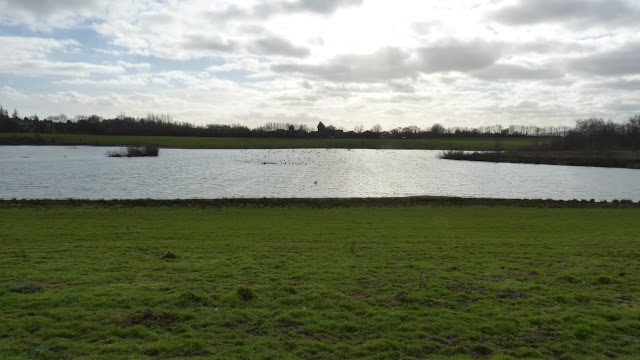
After a successful Big Garden Birdwatch, we paid an afternoon visit to our local nature conservation lake at Brockhall Quarry, former gravel pits owned by the Duchy of Cornwall.
This conservation area is dominated by the lake and its islands, but also includes areas of open grassland (nesting ringed plovers), boggy areas, mudflats and woods.
It is a popular haunt for ornithologists and dog walkers.
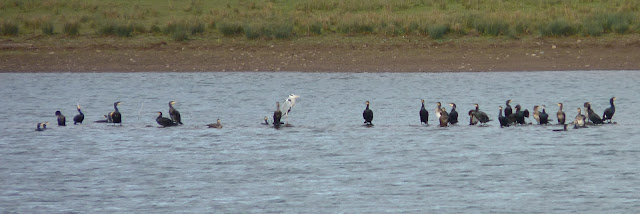
There is always a sizeable number of Canada Geese and today was no exception - you can hear them even if you cannot see them. We had spotted, on an islet in the middle of the lake, a small gulp of cormorants (half a dozen or so) accompanied by a single grey heron. The heron either wanted to be on his/her own or did not fancy a fishing competition for his/her supper so attacked the cormorants and drove them off into the water. Almost immediately, a larger gulp of cormorants arrived to take up residence on and around the islet. The heron, now greatly outnumbered, was resigned to sharing the space and fishing rights with the cormorants and left them alone.
Here is a photo of one of the cormorants in its classical pose drying its wings after a dive. All photos were taken with a handheld Panasonic Lumix DMC-FZ-38.
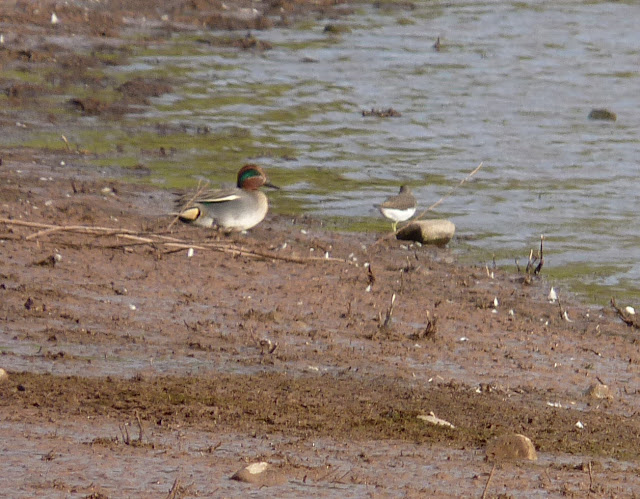
The most numerous species were widgeon (>100), both on the lake and the grassy areas. On the lakeshore, there were about half a dozen teal and a single lonely green sandpiper foraging for food in the mud.
Finally, here is a list of the birds (and approximate numbers) we saw at Brockhall that afternoon:
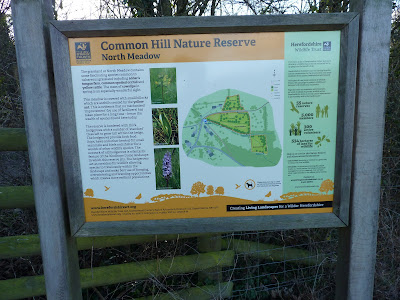
Common Hill Nature Reserve is a collection of small fields/meadows containing old orchard trees located near Fownhope, Herefordshire and managed by the Herefordshire Wildlife Trust (HWT). The Voluntary Warden is a friend of ours and we help out on an ad hoc basis. My job is to spot things and ask 'What is that?' so Mary can then identify and record them.
There are four parts to the nature reserve: North Meadow, Monument Hill, Old Cider House and, the recently purchased, Round's Meadow. For reasons unknown to me, we rarely visit Old Cider House - maybe it is the less interesting part of the reserve.
Today (27/1/22) was a warm sunny January day; around 13 oC at the time of our visit (2 pm). Because the reserve is on a north-facing slope, much of it was in shadow by this time of the day and the cool breeze made it feel colder.
As a project for 2022, we thought we could keep a photographic record of the seasons on the reserve as well as a list of flora and fauna spotted there. This would need repeated visits throughout the year; no hardship during the Spring, Summer and Autumn but Winter????
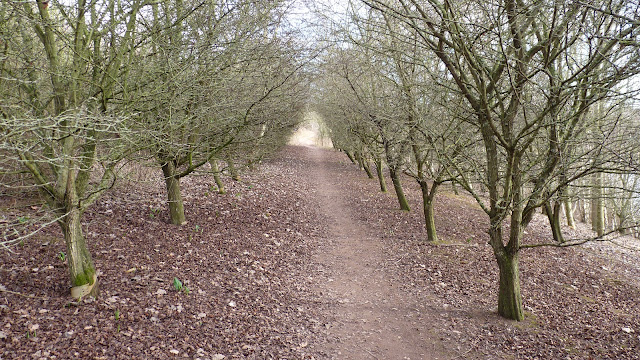
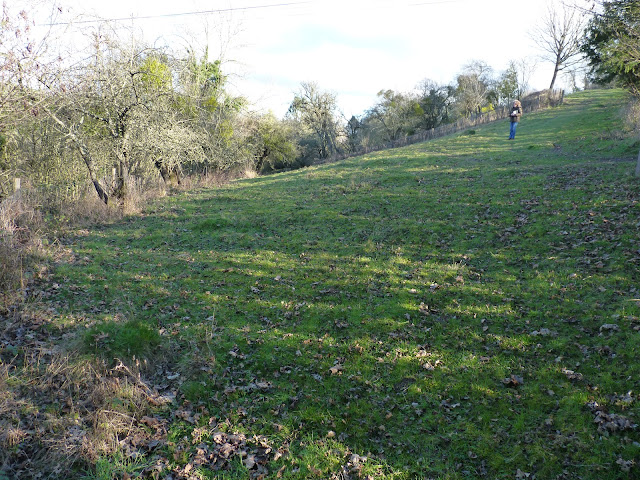
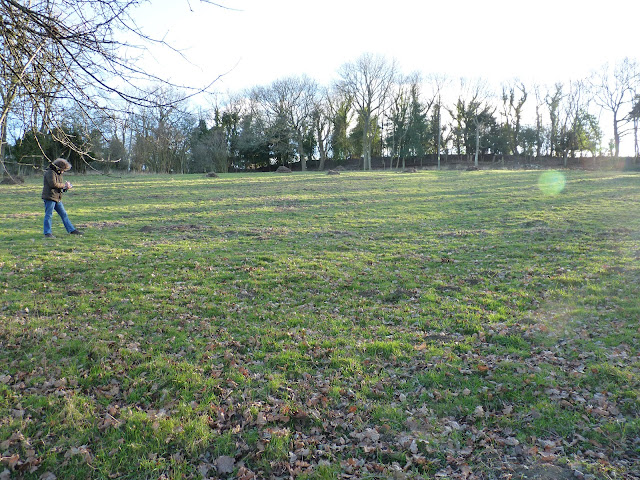
Let's start with January (27/1/22). This view is from the corner of North Meadow looking east. Doesn't look much at the moment but it will fill up later with orchids and other grassland flowers attracting the butterflies and bees. In the distance, behind Mary, is one of the old orchards...
...from where this next photo is taken looking back to where the first photo was taken. In the far far distance (and out of sight) are the Black Mountains and Wales...
...walking past the orchard to the far end of North Meadow, there is a bench from which this next photo was taken. On the other side of the valley is Haugh Woods...
...crossing the lane/footpath (Wye Valley Way) you enter Monument Hill, a good place to see Wood White butterflies in summer...
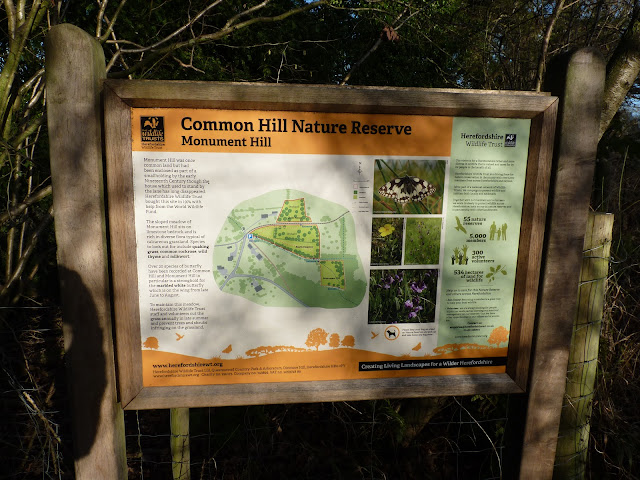
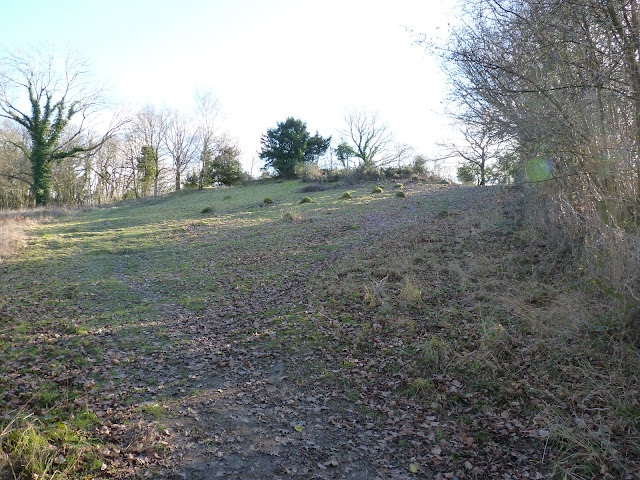
...from the HWT sign looking up the Hill at the old anthills...
...and then down the Hill (looking towards the Monument Hill sign) from the top entrance to Round's Meadow...
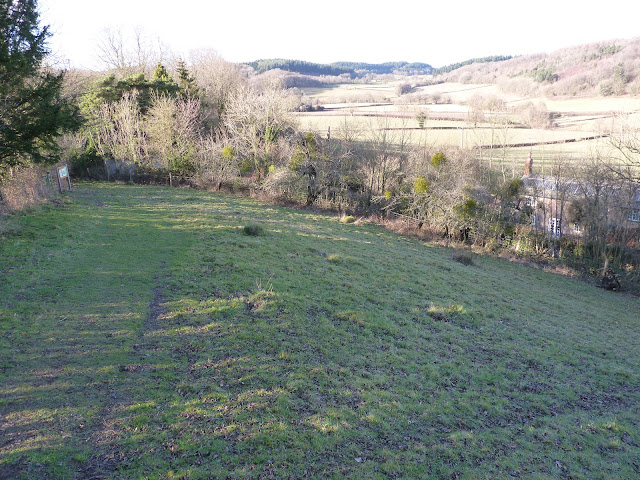
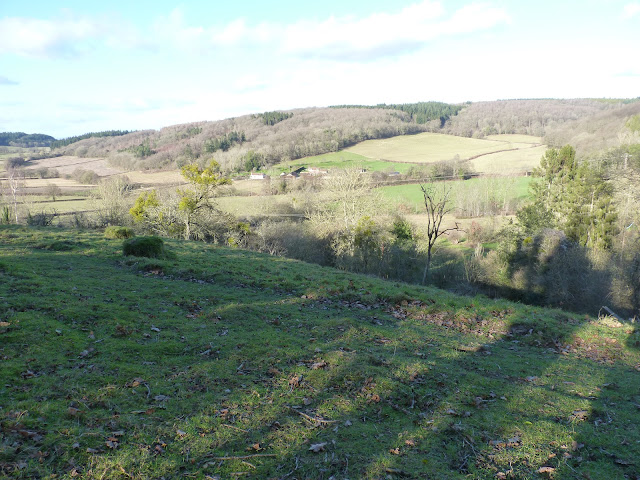
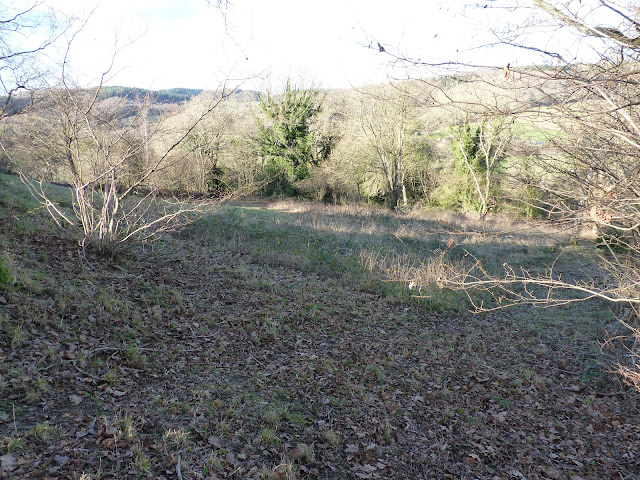
...finally, we enter Round's Meadow with a view down the slope (Haugh Woods in the distance)...
...and then up the slope from the metal gate on the lower lane...
At this time of year, there is not much flora to see. This tortula (?) moss caught our attention...
...with plenty of fruiting bodies on display looking like a miniature forest...
The only other action on the reserve were three buzzards, several wood pigeons, a song thrush, a robin, three crows, about 15 rooks and a blue tit (heard but not seen).
A riverside garden bordered by the River Wye and with spectacular displays of spring bulbs.
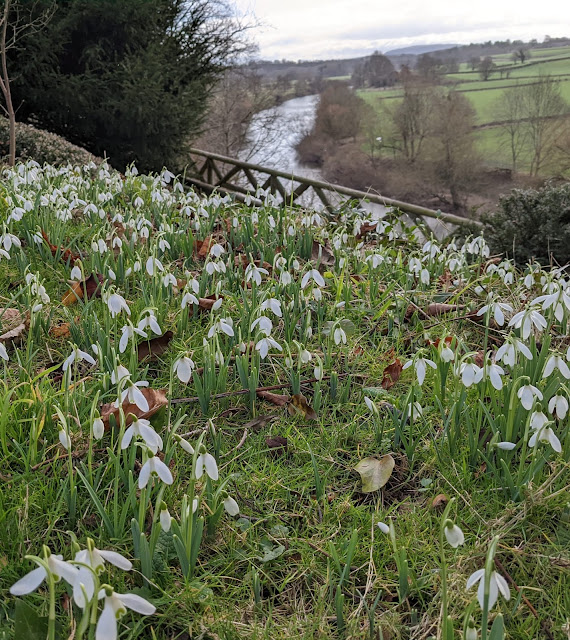
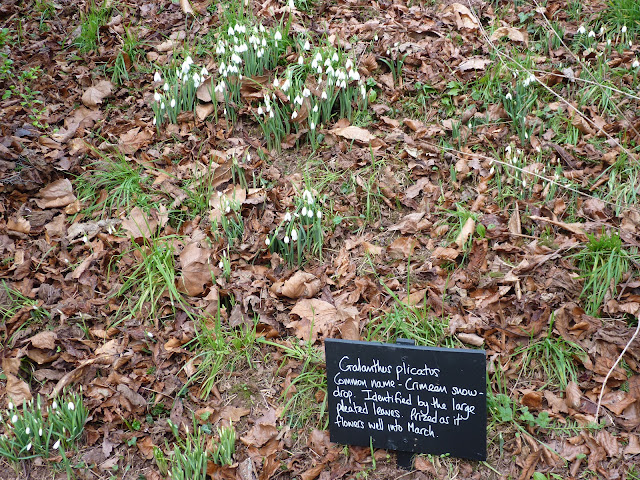
The Weir Garden (National Trust) is only a short drive away and we are regular visitors. Today (January 29) was the first open day of 2022 and just in time to see the first flush of snowdrops.
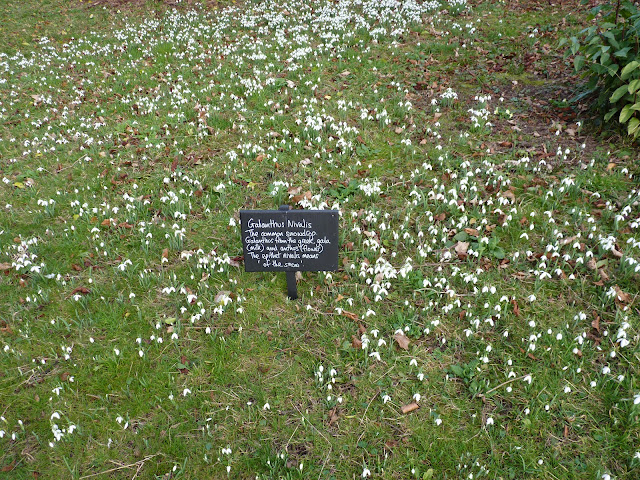
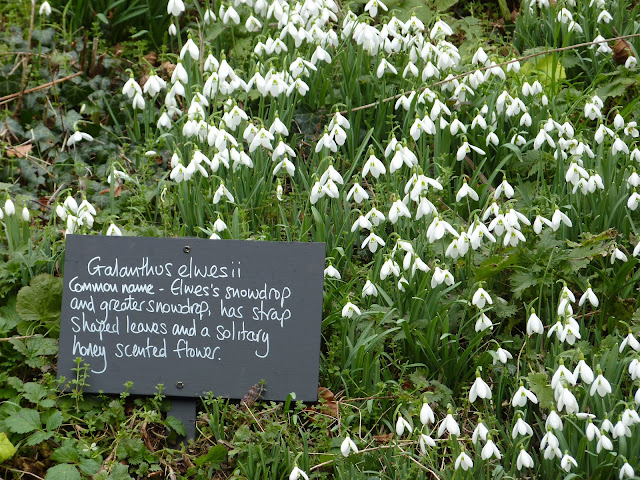
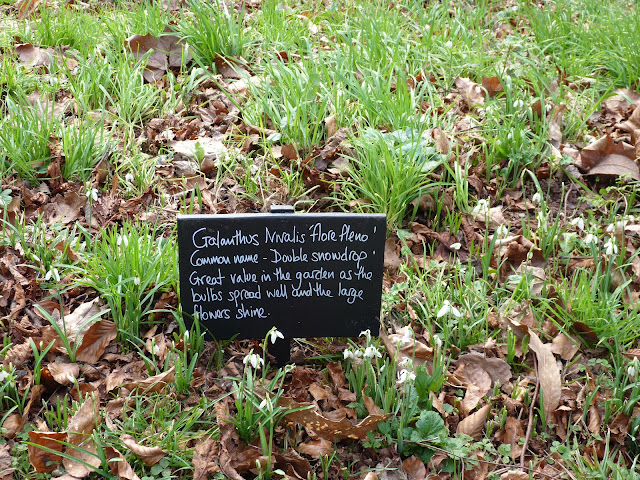
Several species of snowdrop can be found around the Garden such as the common snowdrop (Galanthus nivalis)...
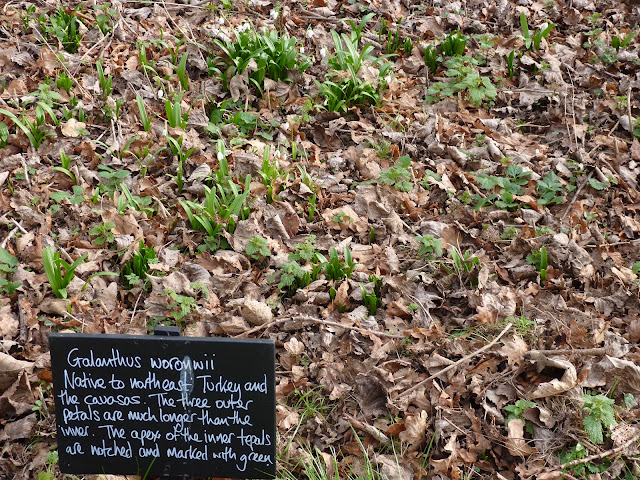
Giant snowdrop (Galanthus woronowii) - you have to look carefully for this one and ignore the spelling mistake! It is found in Turkey and the Caucasus; not quite sure where that place on the label is!
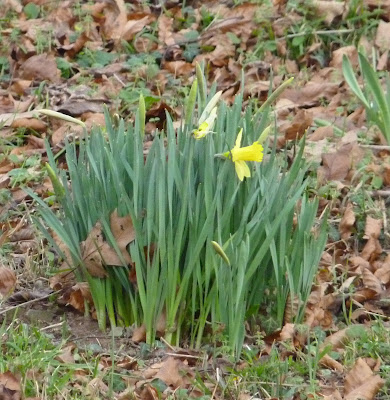
It is a bit early for the daffodils. There were plenty of leaves and some tight buds but also one or two open flowers...
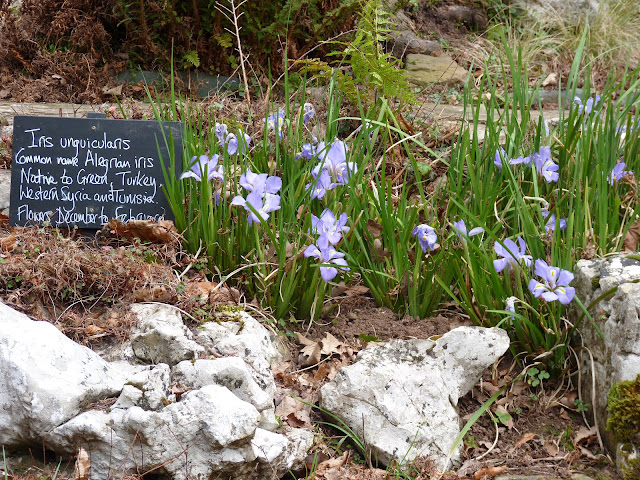
... and a nice display of Algerian irises (Iris unguicularis); spot the two spelling mistakes?
The following plants were in flower, either in small groups or as individuals: aconite, celandine, primrose, violet, mahonia, crocus, heather, winter heliotrope, large daisy, dandelion, stinking hellebore and one, very lonely, wild strawberry!
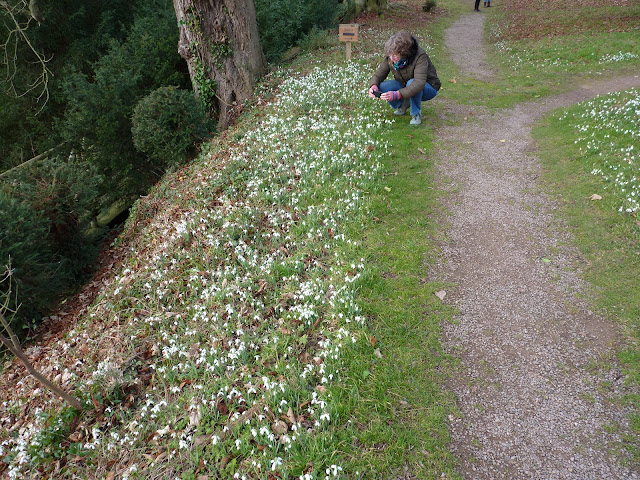
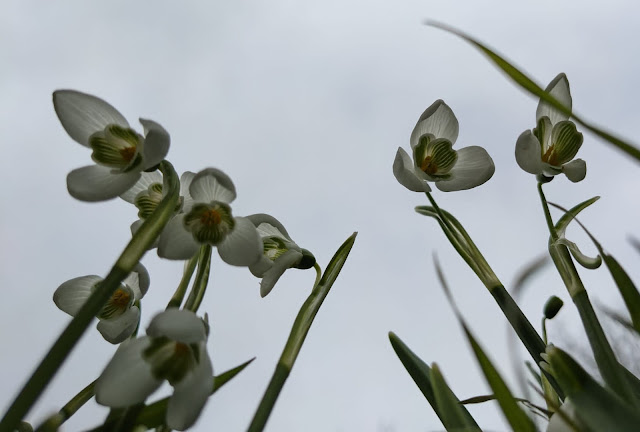
And finally, after many failed attempts, Mary managed to get this photo of snowdrops - I think she was quite pleased with it...
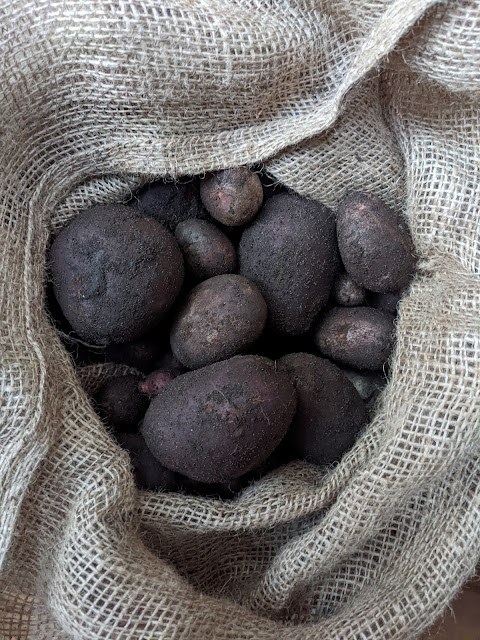
It is 26 January 2022: a dry sunny day with just a little bit of winter warmth (9 oC at midday). Time to dig up the final row of potatoes from the Spring 2021 planting. These are Sarpo Blue Danube, an early maincrop variety.
Sarpo Blue Danube Potatoes
In 2020, I planted two varieties of potato: Sarpo Una (second early) and Sarpo Axona (late maincrop). This took up too much space in my kitchen garden so, in 2021, I decided to go with just the one variety, Sarpo Blue Danube. Over the years, I have tried many types and varieties of seed potatoes but these Sarpo varieties are superior, in my opinion, because they have excellent resistance to blight and disease and the tubers store really well whether left in the ground or stored in the cellar in hessian bags.
My Blue Danube seed potatoes (1.5 kg) arrived from D.T. Brown in mid-January 2021. These were placed on a tray lined with newspaper and left under a table in a light coolish room to chit. Planted out on 1st April after the first application of Nematodes (slug control); 3 x 2.4 metre rows with 7 to 8 seed potatoes per row. Planting the potatoes consisted of digging a trench about 15 cm deep, placing the potato in the trench, covering with sieved garden compost, and then with garden soil to form a ridge about 10 cm high. When the potato shoots appear, cover with more sieved compost to protect from late frosts, enrich soil and increase the soil volume for the potato tubers to develop. May, June & July 2021 had reasonably rainfall so there was no need to water the potato crop. There was some foliage dieback in one or two plants but this did not affect the tubers.
The first potatoes were harvested on 2 September 2021 and the last potatoes harvested on 26 January 2022. Total yield was approximately 35 kg (77 lbs). The seed potatoes cost £5.95 and the value of the crop, based on equivalent organic potatoes from Sainsbury's on 26/1/22, was £31.50. [Note: 35 kg of non-organic potatoes from Sainsburys would cost £12.60].
Finally, a word about the potatoes! Some potatoes exhibited a little bit of scab but this was largely cosmetic and was removed during peeling. Flavour was excellent. These potatoes are best suited for mash, roast and chips/wedges. They show excellent dormancy (i.e. very reluctant sprouters) and can be stored above or below ground.
In the past, polystyrene packing peanuts were popular as padding material for protecting delicate paraphernalia transported via parcel post. While cheap, convenient, and cost-effective for commercial companies, they were considered ananachronistic annoyance to anyone else.
Sustainable packing, in the form of cornstarch peanuts (other starch sources are available), started to appear about 25 years ago but even these are now losing ground to the ubiquitous paper/cardboard padding/packaging of Amazon fame.
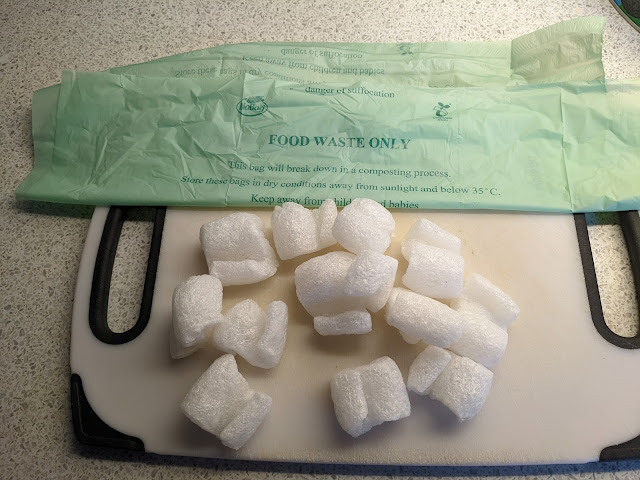
Last week, I received a consignment of organic bread flour which did contain starch peanuts (see photo) though perhaps they would be better described as starch quavers after the well-known cheesy snack.
I also use compostable bags in my kitchen caddy where I collect food scraps before transferring them to the hot-composting bins. Typically, one compostable bag will be re-used 10-20 times (1-2 months) so I don't use that many. Cornstarch peanuts, when available, are added to the caddy in small amounts.
The simplest way to see if you have the cornstarch or polystyrene (PS) peanuts is to pour boiling water over them (see video). Cornstarch will dissolve whereas PS will just float.
So, how compostable are cornstarch peanuts and compostable bags?
The first thing to note is the difference between biodegradable and compostable bioplastic.
Biodegradable - simply means the material can be broken down by micro-organisms There is no time limit and the breakdown products may, or may not, contain toxic chemicals.
Compostable - specifically can be broken down by micro-organisms into water, carbon dioxide and biomass with NO toxic residue. The rate of decomposition has to be the same or faster than cellulose and the end product shall be indistinguishable from naturally-composted biomass.
Cornstarch Peanuts
Made from 100% cornstarch, these do disappear in the composting process either by biodegradation and/or dissolution. Being cellulose-based, they will take a while to break down; about 6 months in a 'cold' compost heap (25 - 40 oC) or 6 weeks in a 'hot' composter (50 - 60 oC). I did a quick literature search on Google Scholar to see whether the peanuts could be pretreated (e.g. acid hydrolysis) to speed up the composting process but it seems the natural enzymes in the compost heap do the job quicker and at lower temperatures. I am currently looking into the best way to add 'peanuts' to the composting process. Intuitively, if the compost heap is on the wet side (e.g. lots of lawn cuttings, kitchen scraps) then it may be best to add as whole peanuts as this will assist natural aeration of the heap. On the other hand, dissolving the peanuts in a minimum of hot water and mixing into the heap would maximise the cellulosic surface area and increase the composting rate.
Compostable Bags
These are definitely trickier and more difficult to compost. Even after hot composting at 40 - 60 oC for 30 days and then further ambient composting for 6 months, there will usually still be remnants of the bags in the compost. I could pick out the bits and return them to the hot composter bin for another cycle but it is probably not worth it. Leaving the remnants exposed to sunshine and air on the soil will complete the biodegradation process.
The problem with compostable bags is that they are only 85-90% starch. Other stuff (co-polymers, plasticizers, etc) is added to give the bioplastic film the necessary physical and mechanical properties (e.g. water-solubility, tensile strength, permeability, etc.). So the added extras and the manufacturing process make biodegradation more difficult, especially in 'cold' composters. The video shows the effect of boiling water on a compostable BioBag...
...which illustrates the problem!
Nowadays, magazines are often delivered in compostable wrappers. When I next get one delivered, I will subject it to the hot water test. In the meantime, I shall continue to cut them up, add to the kitchen caddy and hope they eventually decompose.
The weather has been dry & cold for a few days now which has meant brief and sporadic visits to the kitchen garden doing only the essentials: tending the hot composting bin, digging up parsnips & beetroot, and picking chard, spinach & kale.
An additional task at this time of year is surface-spreading well-aged garden compost around the kitchen garden. This is a good time of the year to do this as it allows the worms plenty of time to work the compost into the soil while helping to suppress weeds.
I operate a two-tier compost system starting with hot bins (above) to accelerate the composting process and kill off weeds/disease before finishing off with a maturation period of 6 months or more in standard bins (below).
My 'Maturation Bins' (MatBins for short) are full after a season of compost-making so they need to be emptied before the new season of vegetative growth starts and intensive composting resumes. For about a week now, I have been emptying one of the MatBins and spreading the unsieved compost on the raspberry bed. First of all, I rake back the bark mulch on the raspberry beds before spreading the compost to a depth of about 2.5 cm (1 inch) and then replacing the bark mulch.
Another party has been showing interest in my toils and visits every workday. You may just be able to spot him/her in the photo above. Here is a close-up taken on my phone...
Of course, the robin is not here to admire my work but quite fancies its chances of finding worms in my freshly-deposited compost. As luck would have it, my compost is full of squirming brandlings (tiger worms) so there is one happy robin!
Robins are extremely territorial with other robins but more than happy to live alongside humans. They seem to like gardeners and the feeling is mutual. The gardener provides freshly-dug soil bringing worms and invertebrates to the surface and the robin repays this with its delightful bird song and friendly demeanor. You can find a few more facts about robins here.







 Posts

